When people have more options than ever before, what can travel and hospitality brands do to keep them coming back?
It's a pressing question. The difficulty of building loyalty in a market where convenience is king and customers are spoiled with so many choices is the primary force shaping customer experience (CX) in the industry, according to the travel and hospitality edition of our 2027 CX Trends Report. And, based on the responses of the 100 business leaders we surveyed, it’s a challenge many brands are counting on AI to solve.
When asked how AI could have the greatest impact on CX in the coming years, leaders identified its potential to enhance loyalty programs and personalized offers above all other opportunities.
Let’s look at three other ways travel and hospitality brands can use AI to create more compelling experiences, stand out in a crowded market, and build lasting customer loyalty.
1. Making complex customer journeys feel seamless
A family holiday or business trip rarely involves just one brand. From flights and accommodations to car rentals, restaurants, and fun activities, a single getaway usually involves multiple providers. But people increasingly expect the experience to feel like one connected journey. Delivering that level of convenience isn’t easy, with 79% of travel and hospitality leaders citing managing customer experiences across multiple platforms or partners as a challenge.
AI offers an opportunity to reduce that complexity by coordinating multi-brand experiences, and there’s a clear consumer appetite for AI to take on this role. The majority (57%) of people say they welcome AI managing activities across multiple brands if it makes their lives simpler.
That said, both consumers and brands do have some concerns about AI-orchestrated experiences. People want to retain control and maintain the power to challenge or change the decisions AI makes, while travel and hospitality leaders are sensitive to the need to retain ownership of the customer relationship and maintain customer trust.
Using AI to make travel more seamless while keeping people informed and empowered should help brands boost customer loyalty by delivering experiences worth returning for.
2. Winning customer preference in an AI-influenced world
Before brands can delight holiday and business travelers with seamless experiences, they first have to attract their attention. And AI is changing how brands are discovered and selected.
A large majority (85%) of travel and hospitality leaders say AI assistants will become the primary starting point for many customer journeys, and 78% say brands that fail to adapt risk becoming invisible. The majority say AI assistants will impact customer acquisition by helping people make faster decisions, and 81% say influencing AI assistants is becoming as important as influencing people directly.
Consumers are inclined to agree – 54% say brands will become easier to ignore if they aren't visible through AI assistants; that rises to 62% among millennials.
Travel and hospitality brands that quickly adapt to this shift and ensure AI assistants can find and understand what makes their products and services relevant will have a distinct advantage over less AI-ready competitors. At the same time, they'll need to continue to deliver the quality, value, and experiences that turn an initial booking into a lasting relationship.
Brands will also need to make sure traditional discovery channels aren't neglected in the rush to support evolving search behaviors. Today, only 17% of people say they would start with an AI assistant when planning and booking a trip; search engines remain the most popular starting point (selected by 32%), while comparison sites are still just as popular as AI assistants.
3. Turning AI-powered recommendations into action
Helping people discover the right option is one thing. Allowing AI to act on their behalf is another. As AI becomes more autonomous, travel and hospitality brands have an opportunity to take convenience further, letting AI independently manage aspects of the customer experience.
Compared with the other industries we surveyed for our annual CX Trends Report, travel and hospitality brands appear less prepared for this shift. Only 29% are using AI to manage end-to-end customer journeys, for example, even though 83% expect to be comfortable doing so in the next 2-3 years.
There are some interesting differences between what U.S. and U.K. brands anticipate their customers will want from autonomous AI-enabled experiences. In the U.S., travel and hospitality leaders believe people will be most comfortable with AI comparing their travel or accommodation options. In the U.K., industry leaders expect people to be most comfortable with AI identifying opportunities to save money.
Brands must be careful not to move faster than their customers and remain sensitive to how people’s attitudes can vary across different autonomous AI use cases. While 65% of people are already happy with AI shortlisting suitable products or services, for example, only 41% are comfortable with AI booking and managing their travel arrangements.
Travel and hospitality brands can make sure people at all comfort levels with AI acting on their behalf are catered to, putting customer choice at the heart of innovations in AI autonomy. By giving people the freedom to decide which tasks AI should handle, brands can deliver greater convenience without undermining the confidence loyalty depends on.
Building loyalty starts with customer understanding
AI has the potential to make travel experiences simpler, more relevant, and more convenient, building brand loyalty in a crowded marketplace. But whether it does will depend on how well brands match AI’s capabilities to people’s expectations and needs.
With recent advances in identity resolution and AI, travel and hospitality leaders have a great opportunity to learn what matters to customers, remove the friction they want removed, and give them control where it matters most. Brands that invest in understanding their customers and applying AI intentionally will be better positioned to turn greater convenience into lasting loyalty.
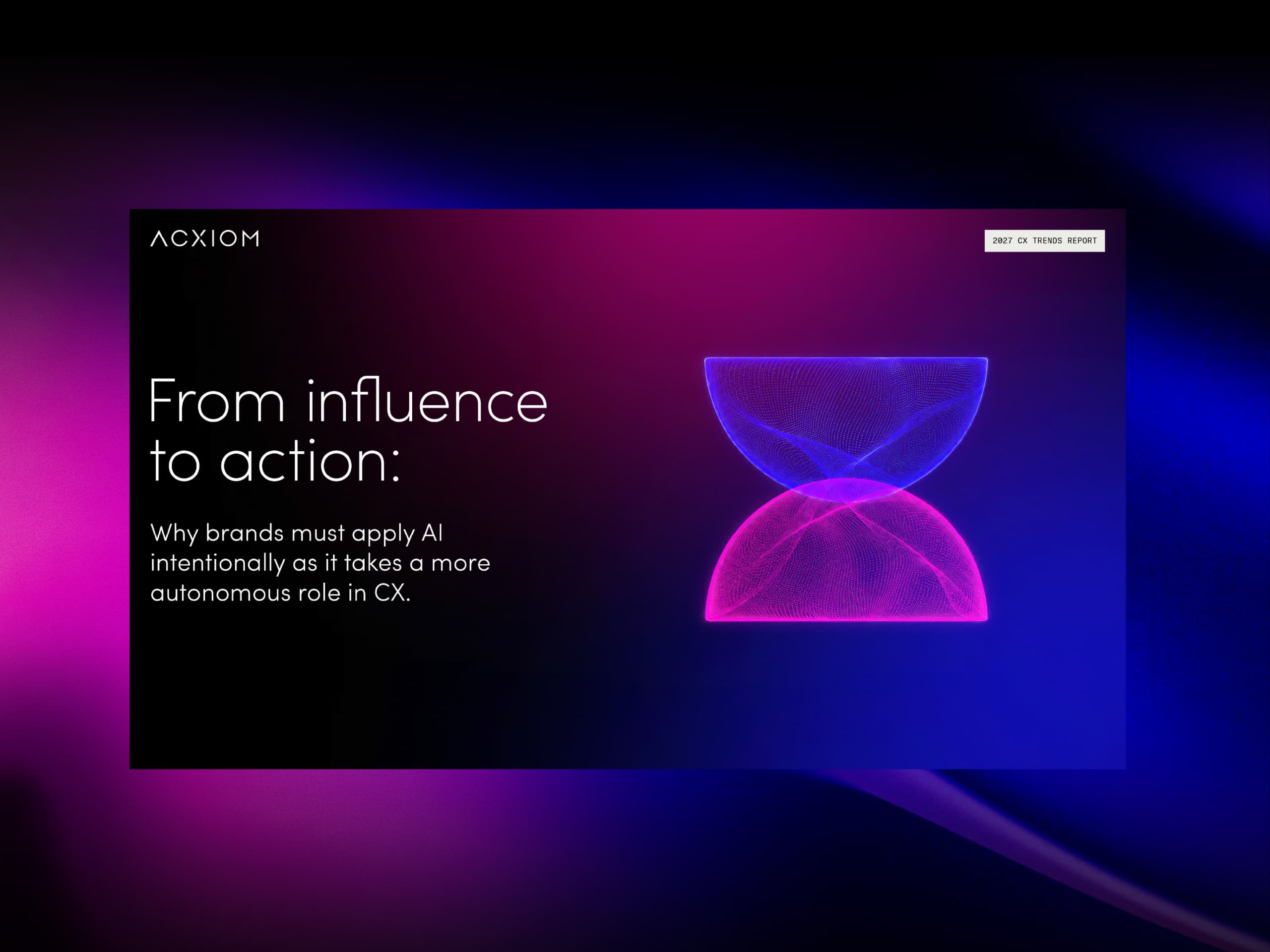
To explore how AI is reshaping travel and hospitality CX, including the perspectives of customers, brand partners, and competitors, read our report: From Influence to Action: Why travel and hospitality brands must apply AI intentionally as it takes a more autonomous role in CX.


Subscribe to our blog
From the Blog